

by Narissa Ventress, M.A., CCC-SLP
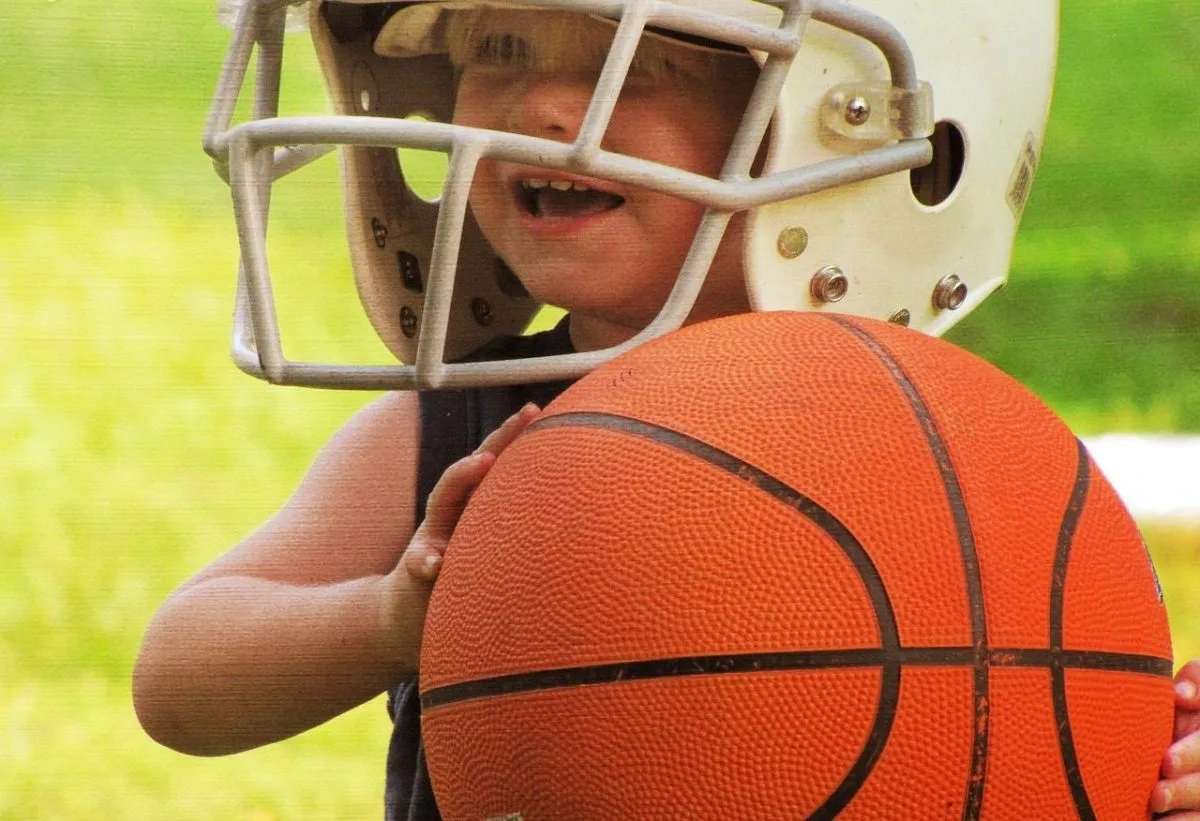
Over 30 million youth play organized sports with some level of contact each year. Injuries happen, but not all injuries are equal. Traumatic Brain Injury, often presenting as a concussion, can affect the developing brain. Each year, U.S. emergency rooms treat more than 100,000 sports-related concussions in kids 19 and under. For Orange County families, understanding TBI helps you evaluate risk, spot symptoms, and know when to seek help from a pediatric speech therapist.
Physical and Behavioral Consequences of a Traumatic Brain Injury
Headache is the most common immediate symptom and often improves with rest and medical guidance. Children may also experience migraines, seizures, dizziness, loss of consciousness, reduced muscle strength, nausea or vomiting, and balance or coordination changes.
Symptoms depend on the location and severity of the trauma. For example, injury affecting parietal regions can disrupt sensory processing, reading, and body awareness. Damaged neurons may not regenerate, but the brain can reorganize through neuroplasticity. Even with reorganization, severe injuries can reduce cognitive capacity.
Behavioral changes vary. Some children return to social settings easily, while others struggle with school routines and show mood swings, irritability, impulsivity, or difficulty expressing emotions. Post-traumatic symptoms can include trouble concentrating, nervousness, and increased frustration tolerance. Younger children may grab items or run from disliked interactions; adolescents may show inappropriate social behavior, temper outbursts, or substance use.
Communication challenges after TBI
Children with TBI may have communication difficulties due to direct injury in language centers or because cognition is taxed. Injury near Broca’s area can affect speech production and articulation. Even if language looks intact, communication can suffer when attention, memory, organization, and problem solving are stressed.
In school or social settings, you might notice slow responses, requests for repetition, or answers that miss the point. Strategic learning can also be affected, making it hard to extract the “gist” of information and retain what matters most. These challenges can persist years after injury.
Strategic learning is another essential function that is often poorly developed in children that have sustained traumatic brain injuries. Strategic learning is defined as the brain’s ability to extract essential information while discarding unimportant features. It is essentially the ability to summarize important information and store it adequately. Children with impaired strategic learning skills may retain only or too much unessential information or may not be able to recall the important point of a new task or lesson. Even after several years post injury, children suffered measurable difficulties. See one of the comments of this study:
We asked 38 children with TBI to summarize an expository text, we found that children aged 8 to 14 years, who had sustained either a mild or severe TBI (at least 2 years post injury), exhibited difficulty in abstracting “gist” compared with typically developing children (Chapman et al., 2006)
Language Disorders
Severe trauma to the brain can lead to neuron injury resulting in both focal and global brain lesions. It’s basically an abnormality seen on a brain scan/image. These lesions can occur in the language centers of the brain leading to various language disorders. Acquired language disorders can manifest through deficits in syntax, pragmatics, vocabulary or semantics and even deficits of higher-order language such as understanding of irony and sarcasm.
Specific communication deficits in children and teenagers following a traumatic brain injury could be:
- Aphasia: difficulty producing and understanding speech correctly
- Dysarthria: is a motor-speech disorder characterized by a slurred speech
- Apraxia: difficulty programming the muscles responsible for speech
Cognitive Deficits
Traumatic brain injuries most often occur in the frontal lobes and temporal lobes. The frontal lobe is responsible for initiation and attention among many other responsibilities. The temporal lobe has a lot to do with memory as well as emotional control. Because of this, children and young adults with both mild and severe brain injuries are at risk of suffering from cognitive deficits.
These are usually translated as changes to reasoning, memory, planning and initiating tasks, difficulty with solving problems and difficulty learning new information. After a TBI, children have even been observed to exhibit difficulties navigating around their neighborhood and school which is usually caused by more general difficulties with attention. Others have been observed as fidgety and easily distracted, which ends up hindering their ability to learn new information, both in the classroom and at home. When it comes to memory – older memory, prior to the head injury is relatively unaffected. However, they can show difficulties with the acquisition, consolidation, and recall of new information.
Parents, teachers, and school medical staff must always be conscious of the symptoms and signs of traumatic brain injuries. Young adults and teens often avoid reporting injuries and symptoms in order to portray toughness or avoid social stigma, because of their dedication to the team or because they assume it’s a normal passing state. Younger children may express symptoms through simpler or unconventional vocabulary, sometimes not easily understood, it’s important to look for any unusual changes in exhibited behavior.
Although many children and adults alike recover from mild to moderate traumatic brain injury with little to no repercussions, multiple traumatic events can still lead to behavioral, communicative and cognitive issues. So, be aware of what activities your kids engage in. Some injuries may just be “part of the game”, but when it comes to TBIs, the cost to play may just be a little too high.
Key takeaway
Many children recover well from mild to moderate TBI. Repeated injuries increase the risk of long-term cognitive, communication, and behavioral issues. Know the signs, seek medical care promptly, and add pediatric speech therapy when communication or school participation is affected.
Friendly next step for OC families
If you have concerns about a possible TBI, contact your physician or visit urgent care. If you have concerns about your child’s communication after an injury, contact a local clinic for a speech and language evaluation in Orange County. Avid Speech Therapy in Fountain Valley serves families across Huntington Beach, Costa Mesa, Santa Ana, and nearby communities with evidence-based pediatric speech therapy and practical home carryover.
If you have any concerns about a Traumatic Brain Injury, please contact your physician. If you have any concerns with your child’s language development, contact your local speech-language pathologist.
Avid Speech Therapy is located in Fountain Valley, in Orange County, California. We offer professional, evidence-based services, and we strive to enrich the experience of each client-therapist relationship.
References
Babikian, T&Asarnow (2009). Neurocognitive outcomes and recovery after pediatric TBI: Meta-analysis of the literature. Neuropsychology, 23(3), 283-296.
Baugh CM, Stamm JM, Riley DO, Gavett BE, Shenton ME, Lin A, et al. Chronic traumatic encephalopathy: neurodegeneration following repetitive concussive and subconcussive brain trauma. Brain Imaging Behav. 2012;6:244–254.
Catroppa, C., Godfrey, C., Rosenfeld, J., Hearps, S. and Anderson, V. (2012). Functional recovery 10 years following pediatric traumatic brain injury: outcomes and predictors. J Neurotrauma29, 2539-2547.
McKinlay, A., Dalrymple-Alford, J., Horwood, L. and Fergusson, D. (2002). Long-term psychosocial outcomes after mild traumatic brain injury in early childhood. J Neurol Neurosurg Psychiatry73, 281-288.
Gamino, J.F., Chapman, S.B.&Cook, L.G.(2009). Strategic learning in youth with traumatic brain injury:Evidence for stall in higher-order cognition. Topics in Language Disorders, 24(3), 1-12.