

by Narissa Ventress, M.A., CCC-SLP
The Power of Bilingualism: Unlocking Language, Cognitive, and Cultural Growth
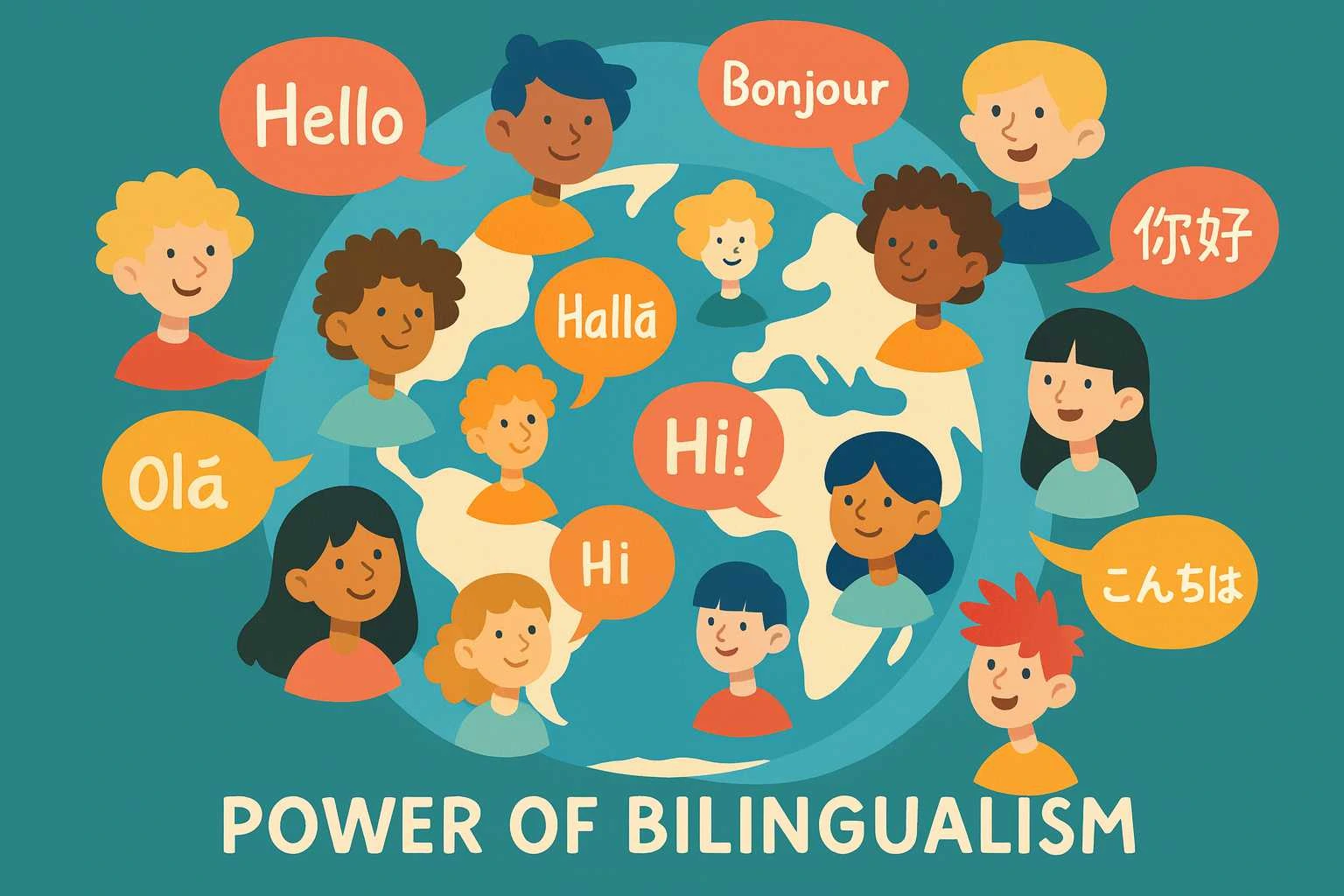
Bilingualism is becoming more common in the United States, and with good reason. Beyond the ability to communicate with a wider range of people, bilingualism offers an array of additional benefits. It not only supports language development and cognitive growth but also strengthens connections to family, cultural heritage, and the global community. These advantages lay the foundation for lifelong cognitive, social, and emotional well-being, far beyond just expanding vocabulary. Families can also find support through Speech Therapy in Orange County that understands bilingual development.
Bilingualism and Language Acquisition
A common myth is that raising a child in two languages will delay their ability to learn one or both. However, research has consistently debunked this misconception. In fact, a strong foundation in the home language (L1), particularly if it’s different from the predominant language, can actually make learning the second language (L2) easier [3].
For example, if a child grows up in a predominantly Spanish-speaking home (L1) and is later introduced to English at school (L2), their strong grasp of Spanish will support their English acquisition. Conversely, if parents abandon their home language in favor of only speaking English, children may miss out on fully acquiring either language. Bilingualism also benefits children with speech delays by broadening their vocabulary and helping them practice articulation through different sounds in both languages.
By embracing bilingualism early, children increase their overall word repertoire, leading to stronger receptive language skills (understanding words) and often higher expressive language abilities (producing words) than their monolingual peers [3].
Bilingualism and Cognitive Development
Bilingualism doesn’t just enhance language skills—it significantly boosts cognitive abilities. Studies show that bilingual children outperform monolinguals in tasks that require problem-solving, abstract thinking, and selective attention. Managing two languages improves memory and concentration by constantly engaging the brain to switch between languages and rules [1].
These cognitive benefits extend into academic success. Bilingual children tend to demonstrate greater cognitive flexibility, enabling them to adapt more easily to new learning environments and challenges. This flexibility translates into better performance in school and more effective problem-solving skills in real-world scenarios [1].
Bilingualism and Cultural Connection
Perhaps one of the most profound benefits of bilingualism is how it deepens a child’s cultural connection. Learning and maintaining a second language allows children to appreciate and engage with their own cultural background, as well as that of others. In families where extended members primarily speak a different language, bilingualism bridges potential communication gaps, enriching family bonds [2].
Beyond the household, bilingualism fosters a child’s understanding and empathy toward other cultures. As children learn to navigate different languages, they also learn to appreciate diversity and develop a more inclusive worldview—skills that are increasingly valuable in today’s interconnected society [2].
In Conclusion
Bilingualism is an invaluable asset, especially for children with speech and language delays. It strengthens language acquisition, boosts cognitive skills, and fosters deeper connections with family and culture. As we move toward an increasingly globalized world, encouraging bilingualism equips children with the tools they need to thrive in diverse environments.
By promoting bilingualism both at home and in educational settings, we empower children to embrace their heritage, enhance their cognitive abilities, and cultivate appreciation for other cultures. Ultimately, bilingualism enriches relationships, nurtures empathy, and prepares children for a global future. If you are exploring services, consider Speech Therapy in Orange County for clinicians who value and support bilingual development.
References
[1] Oxford Research Encyclopedia of Psychology. (n.d.). Bilingualism. https://oxfordre.com/psychology/display/10.1093/acrefore/9780190236557.001.0001/acrefore-9780190236557-e-900
[2] Frontiers in Psychology. (2019). Article on bilingualism and cultural/psychological outcomes. https://www.frontiersin.org/journals/psychology/articles/10.3389/fpsyg.2019.02122/full
[3] Caraballo, J. N. (n.d.). Bilingualism and cognitive development. ERIC (ED226575). https://files.eric.ed.gov/fulltext/ED226575.pdf